€460.00*
Oh NO - I am not in stock right now! 😞
For the small jobs
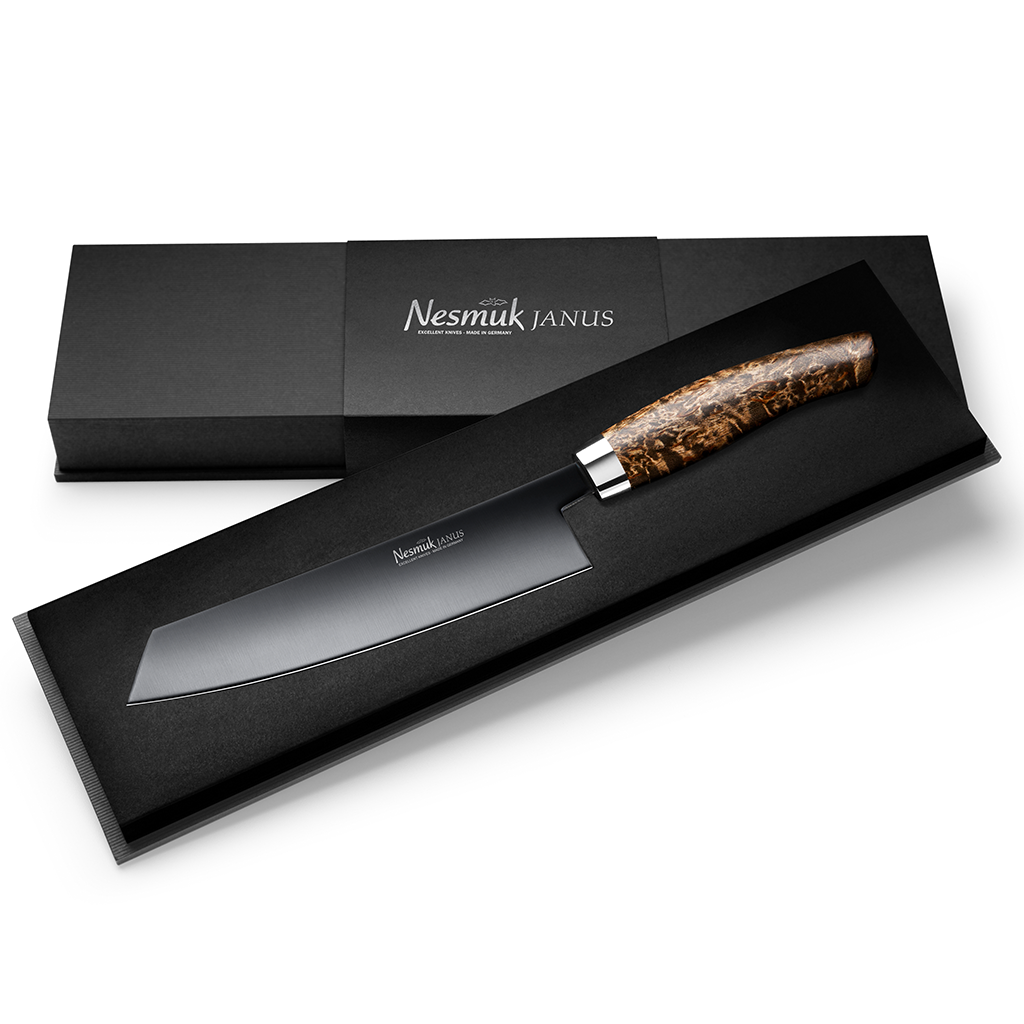
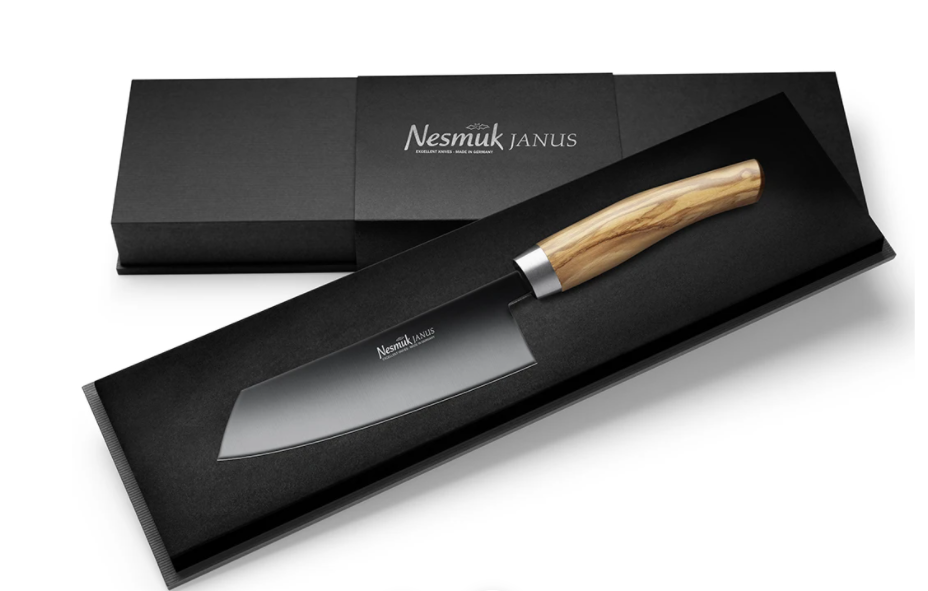
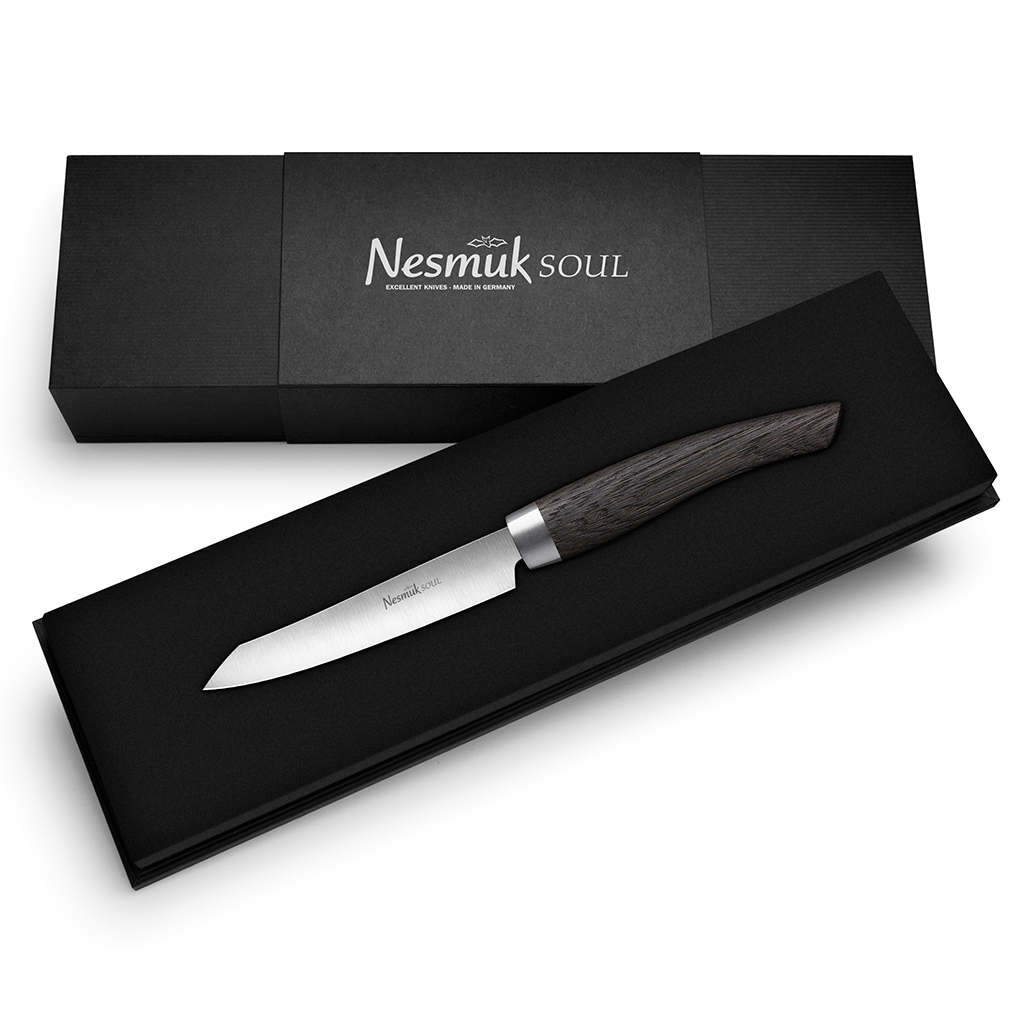
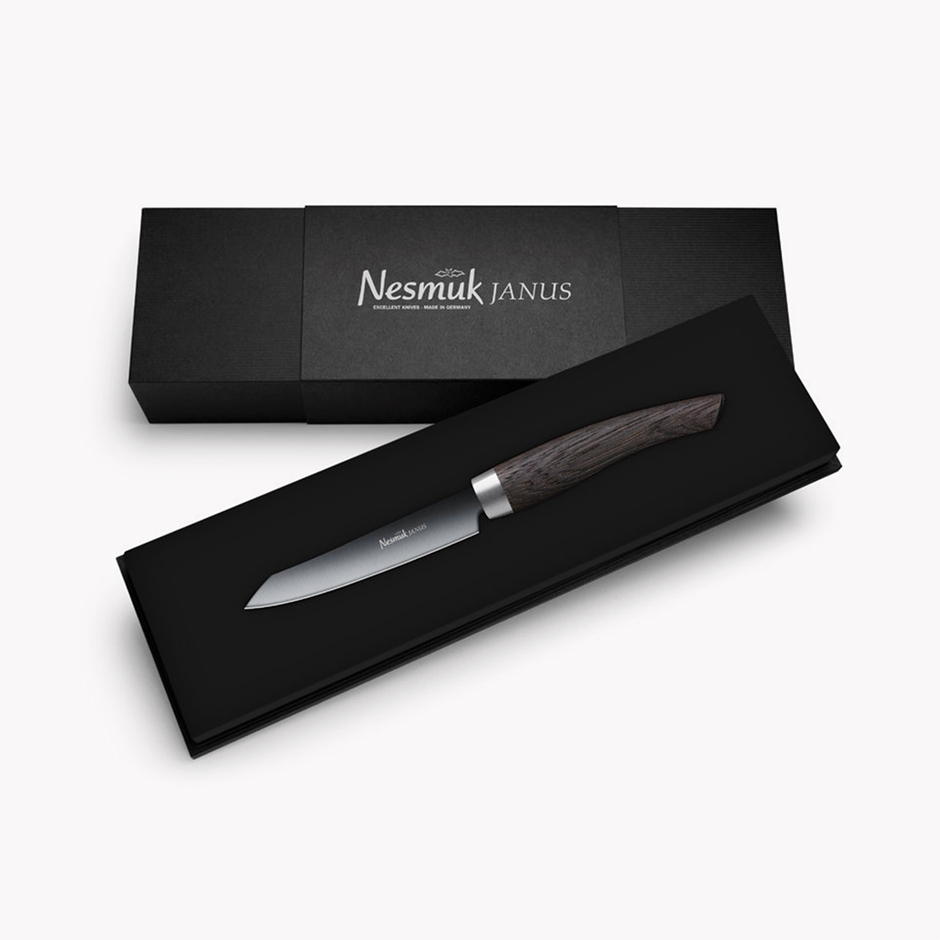
It doesn't always have to be a full-blown chef's knife in the kitchen. It is precisely the somewhat finer cutting tasks that require a more compact kitchen knife. Nesmuk offers the Office knife in its Janus series for this purpose.
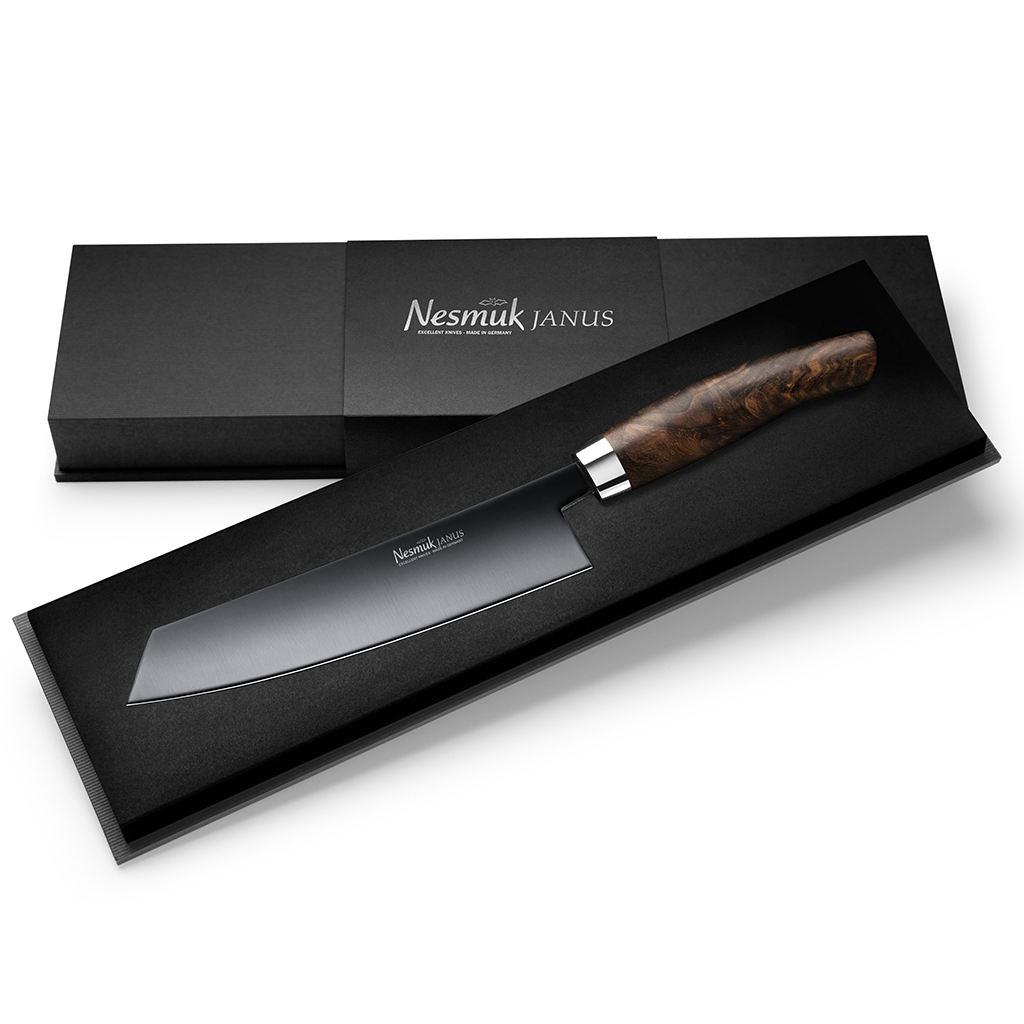
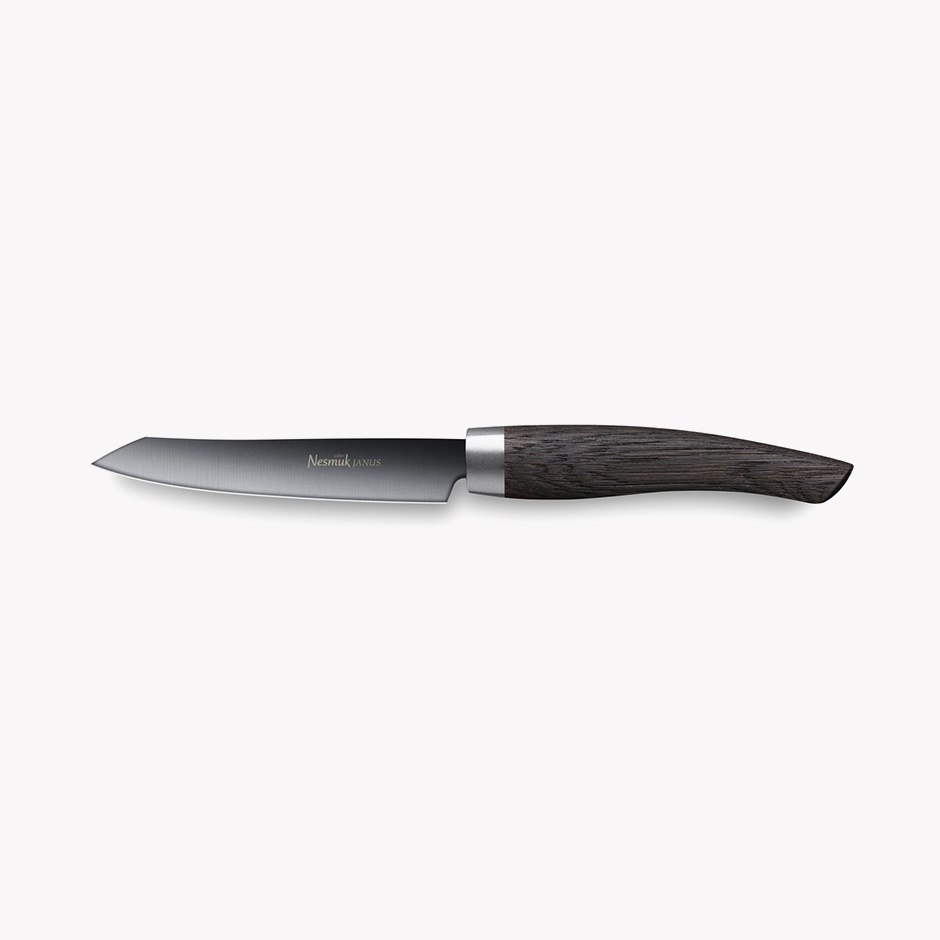
The slightly upward sweep of the blade in conjunction with the hollow grind on one side ensure an amazing cutting performance, which one would not initially expect from such a handy knife. The 90mm long blade proves to be extremely manageable and masters particularly fine cutting work quite excellently. The black polished DLC coating makes the blade less sensitive to corrosion and also offers less adhesion. Although the coating used is only a few micrometers thick, it is extremely robust and scratch-resistant. It is not without reason that DLC is used in the construction of high-performance engines, such as in Formula 1.
The niobium steel specially developed by Nesmuk is very hard (60HRC) and retains its sharpness for an extremely long time. The grind has been chosen for maximum cutting action - making cutting in the kitchen even more fun. Despite the high hardness, the steel has a good degree of toughness, so that even coarser work (such as cutting up a small pumpkin) is no problem.
The handle made of bog oak - a fossil wood that is over 5000 years old - fits wonderfully snugly in the hand and allows you to work without any problems even over a longer period of time. The stainless steel ferrule has been ground so that no transition is noticeable here.
The Janus Office knife from Nesmuk is a great addition to the chef's knife and cuts a fine figure both in the kitchen and in the office.
Technical data
Blade length: 90mm, DLC coating (Diamond-like Carbon)
Handle: bog oak ,stainless steel ferrule
| Blade material: | rust-resistant |
|---|---|
| Handle Material: | Wood |
| Knife type: | Vegetable knife |
Risk of cuts: The most common hazard when using knives is the risk of cuts. Sharp blades can easily penetrate skin and tissue.
Blade slippage: Improper handling or applying excessive force may cause the knife to slip, leading to uncontrolled movements and potential injury.
Injuries from falling knives: Knives should never be left unsecured or placed near the edge of tables or work surfaces, as they may fall and cause injury.
Dull blades: Dull knives pose a higher risk of injury, as they require more force and are more likely to slip. Knives should therefore be sharpened regularly and properly.
Improper use: Using a knife for purposes other than its intended use (e.g. as a prying tool) can damage the blade and may result in accidents.