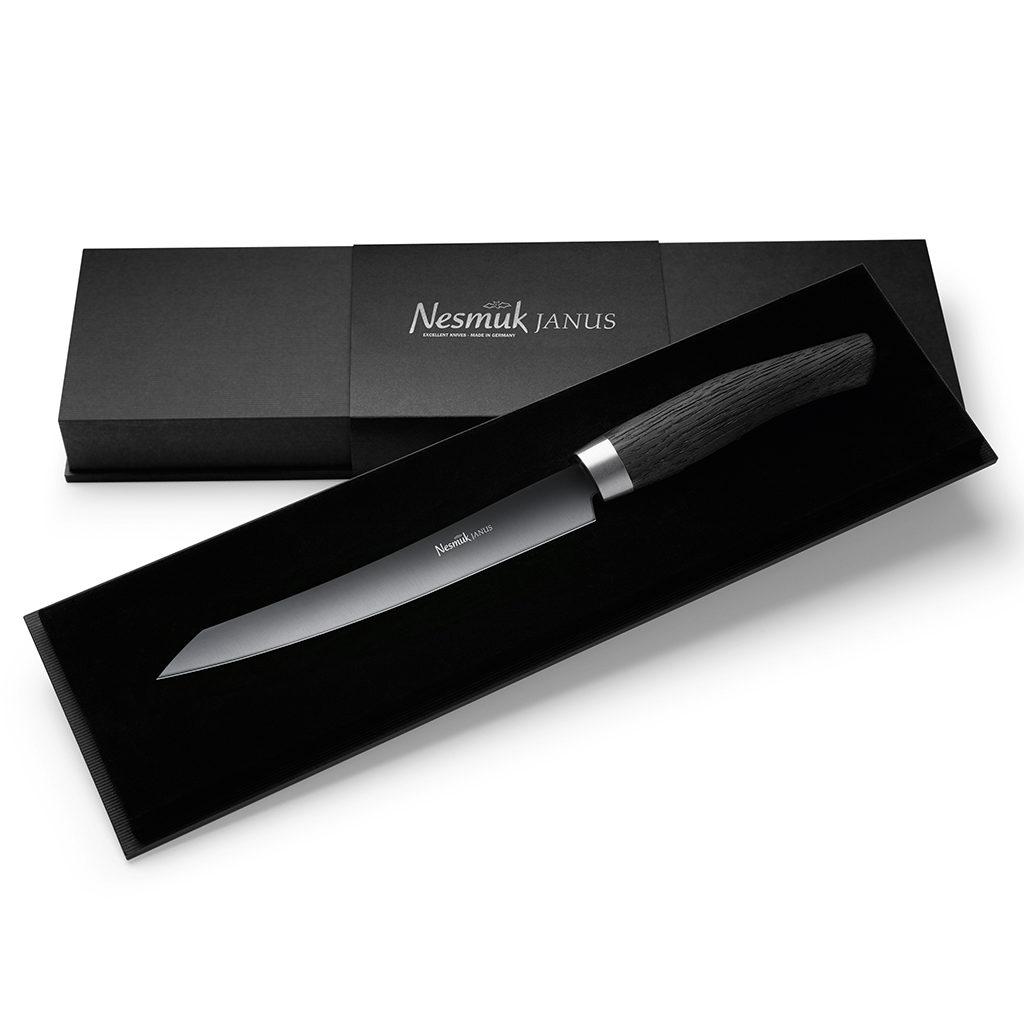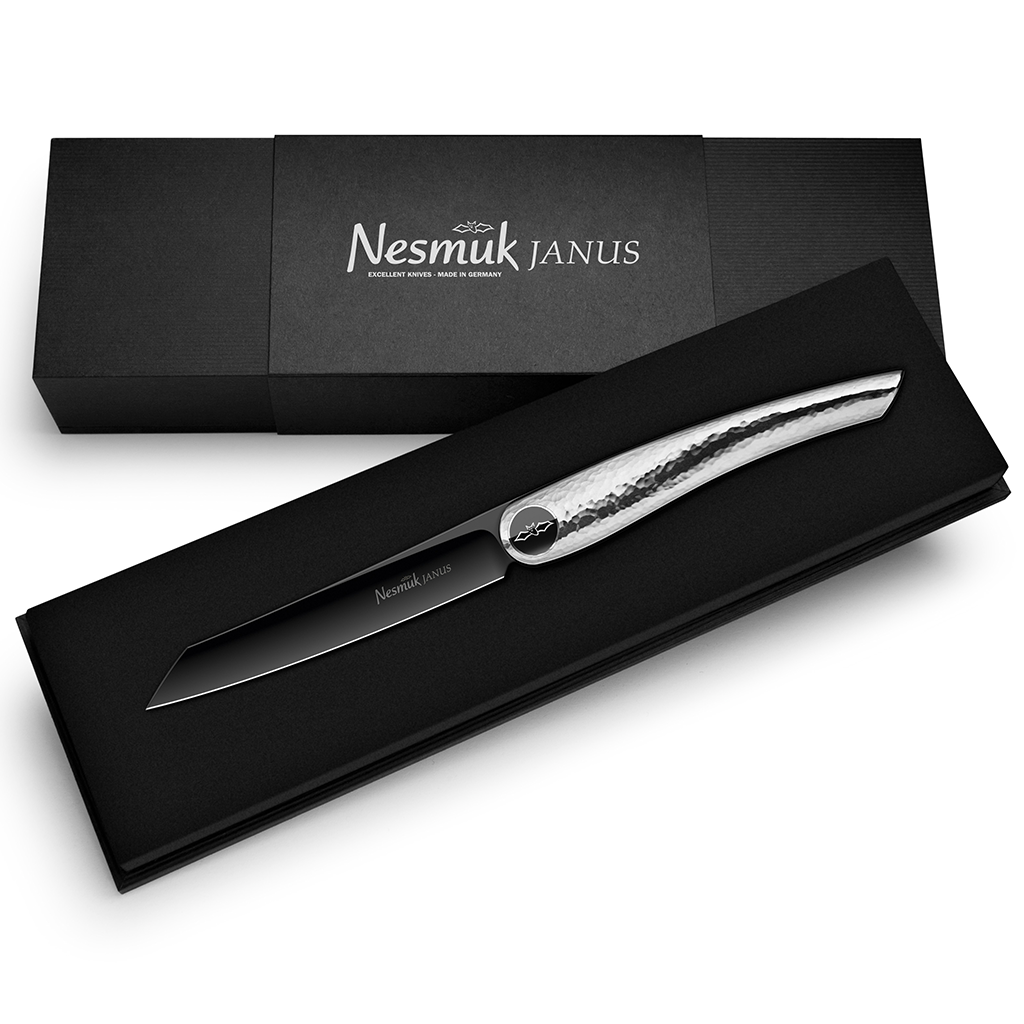
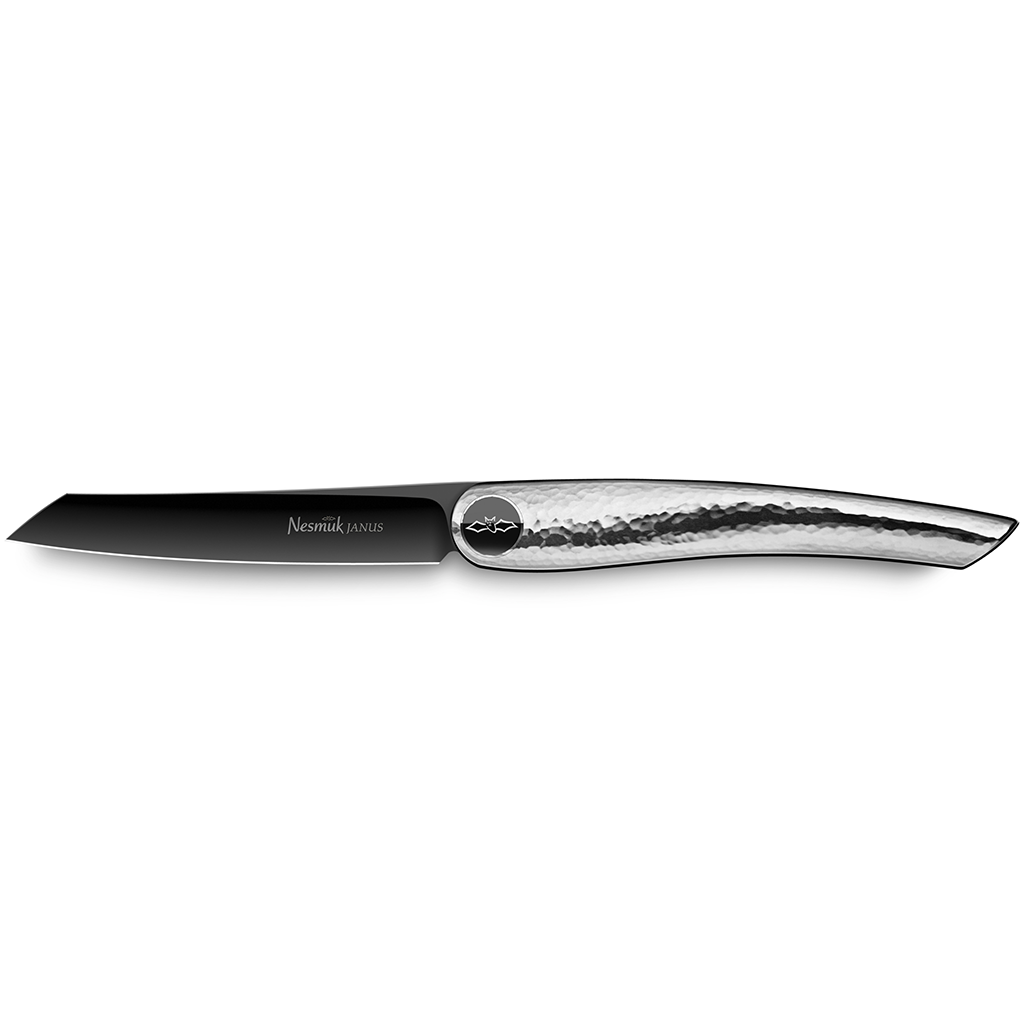
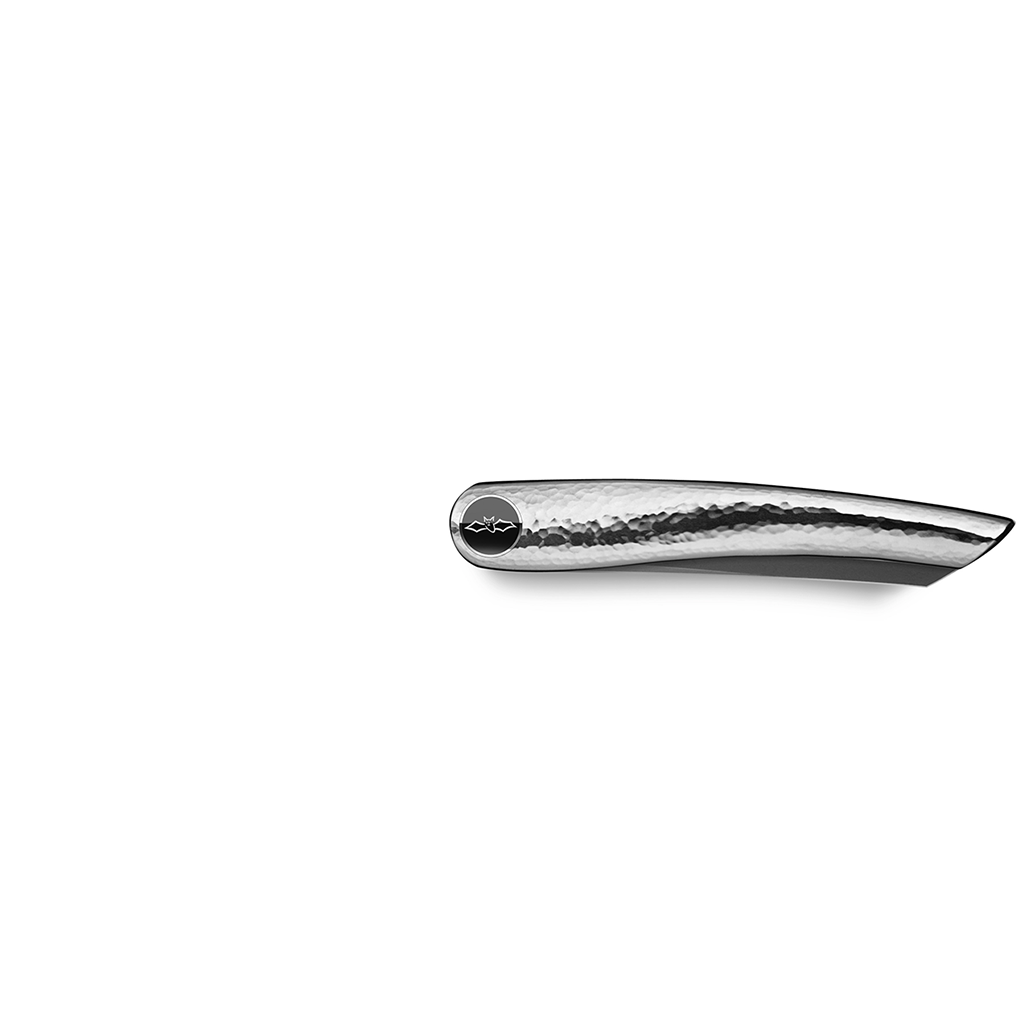
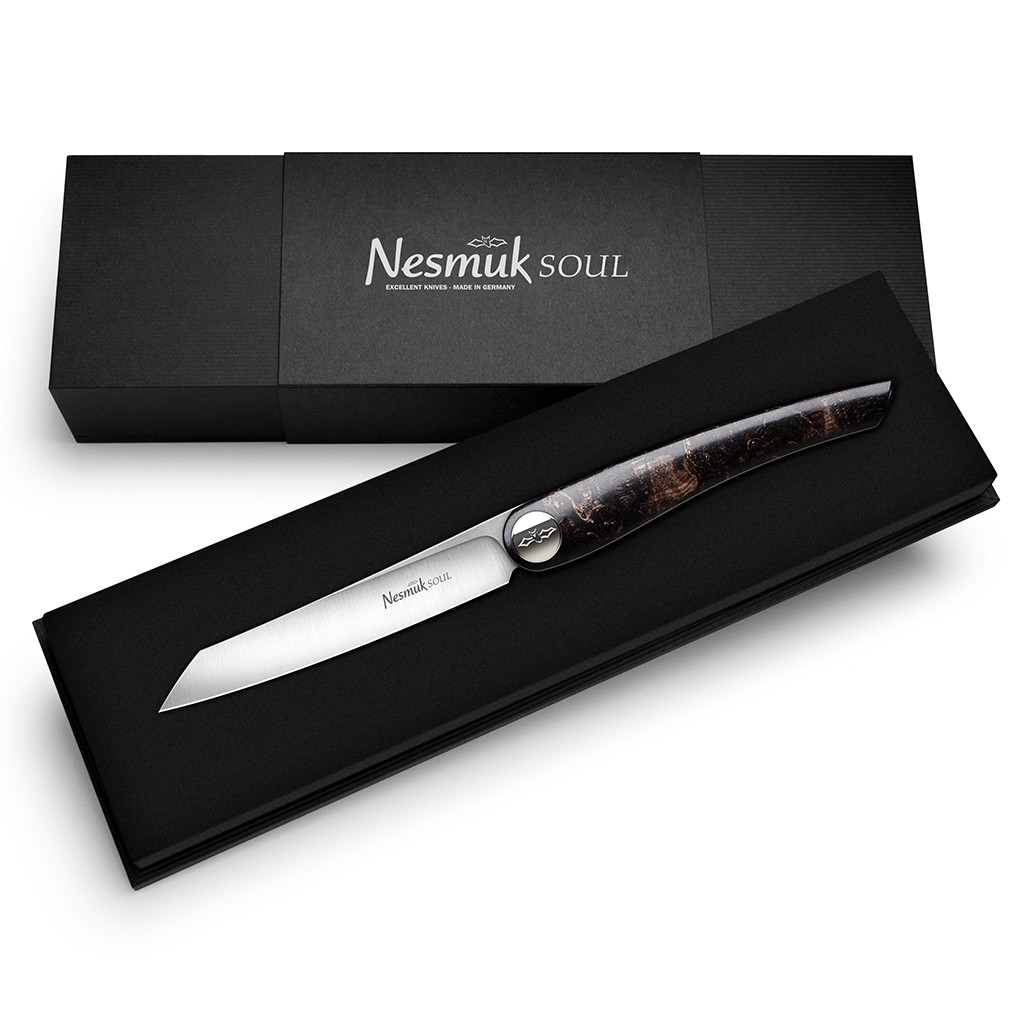
Nesmuk Soul Folder burl birch black elegant kitchen folder with unique burl birch blade made of high performance niob-steel very finely ground Gourmets Carry Knives In the development of their folding knife series Nesmuk have taken their time. A whole 4 years of tireless development went into these knives until the result met the high demands of the manufacturer. The goal was to create a folding knife that is completely without visible hardware but still meets the modern standards of the knife world. To achieve truly absolute perfection, Nesmuk folders must only be built by trained goldsmiths. All components must be adjusted and fitted to the hundredth of a millimeter - there are no tolerances for gaps here. The handle scales made of black burl birch are very cleanly ground. The blades of the Janus series are provided with a black, highly polished DLC coating. Nesmuk's typical niobium steel, hardened to approx. 60 HRC, is also used here. The wedge grind ensures the best cutting properties and the unique appearance of Nesmuk knives. Due to the very fine grind of the knives, the cutting performance of the Nesmuk folding knives is absolutely impressive. With only 0.4mm of material behind the cutting bevel, it is fair to say that this is a true cutting devil. With a holding force of 6 Newton, the Slipjoint spring ensures a secure lock without locking the blade, so that the Nesmuk Folder can be used without any problems - for example, in a restaurant. But not only in contact with food is the great strength of the Nesmuk Folder - here you get a completely made in Germany and incredibly well finished all-round pocket knife.