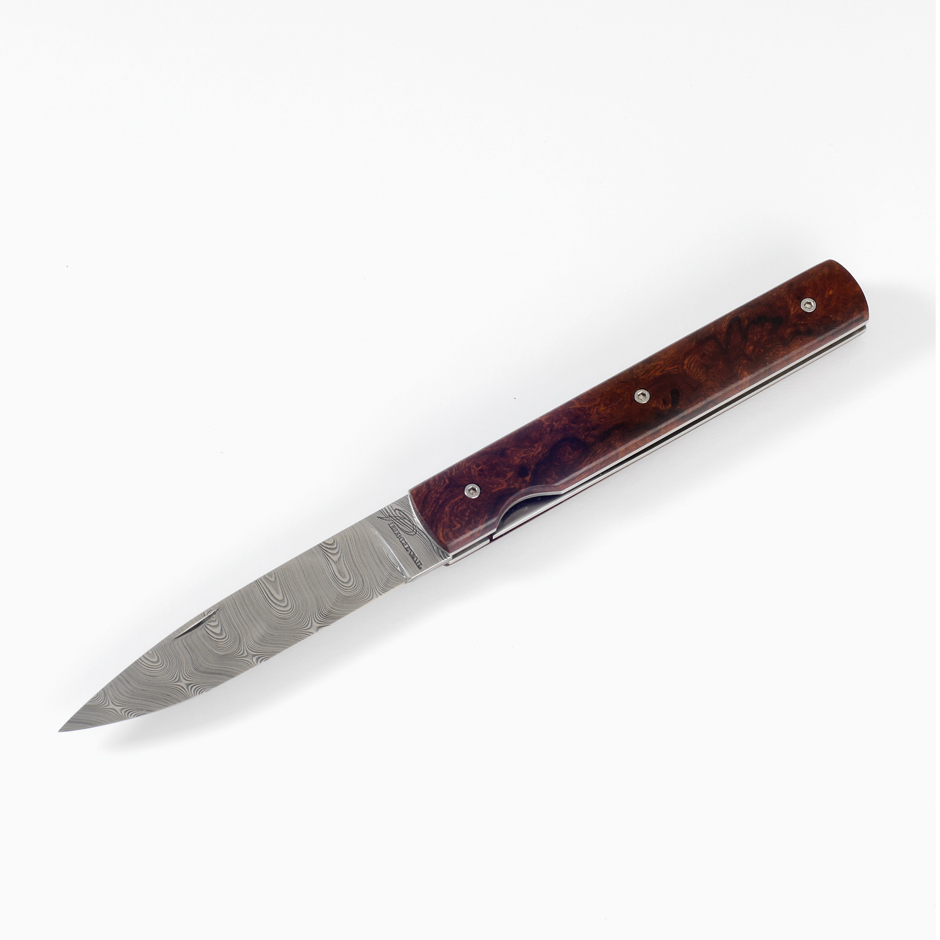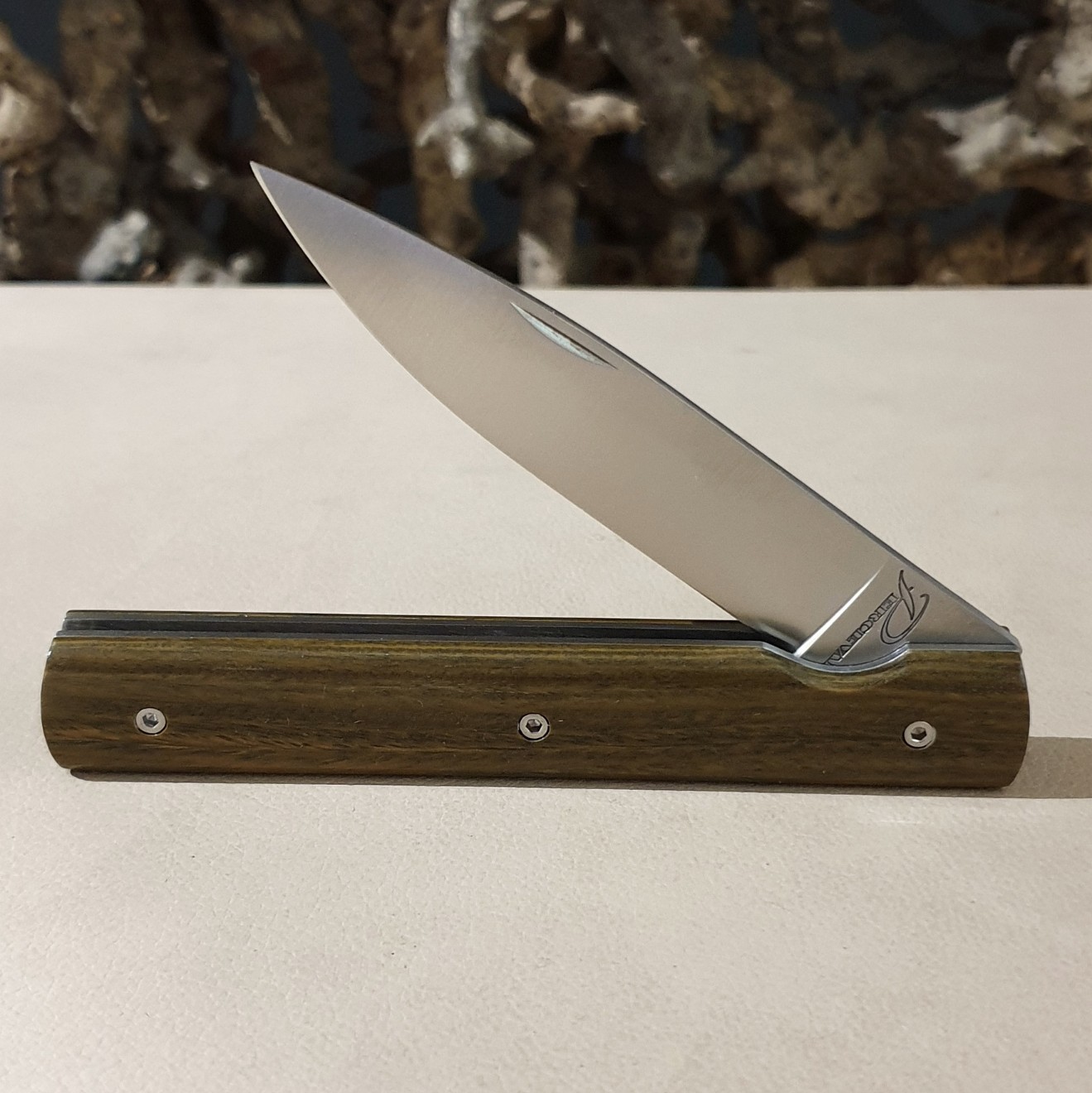
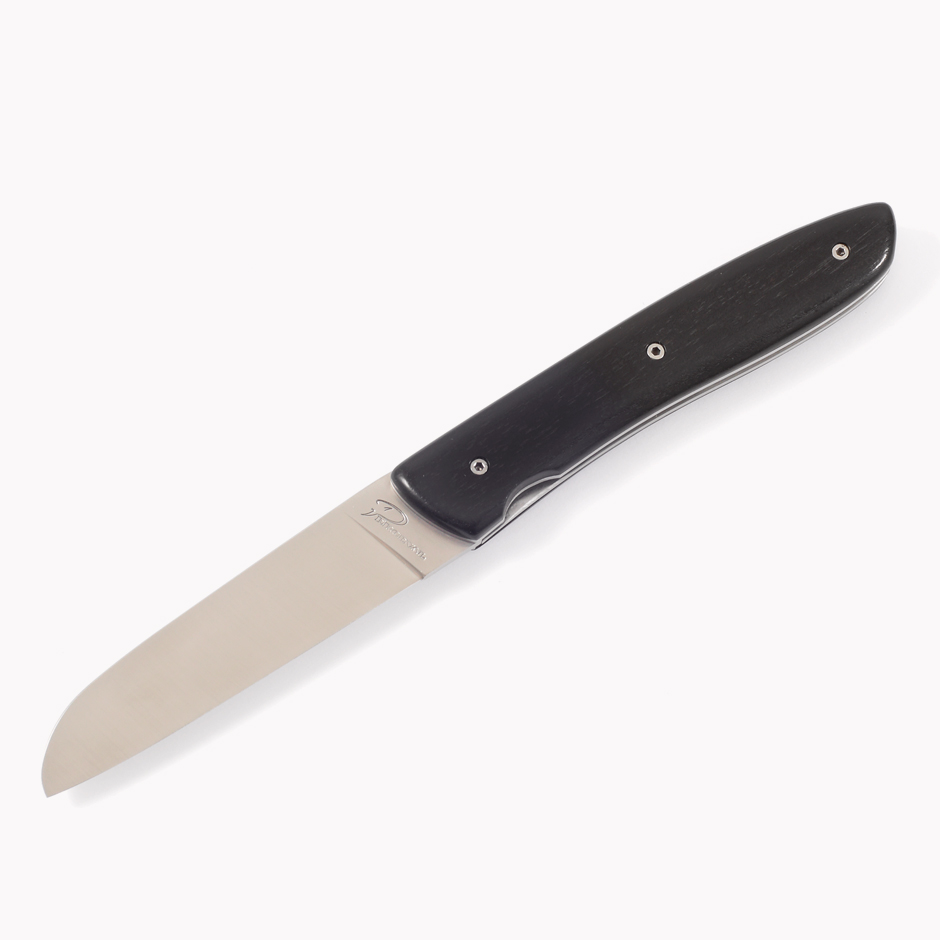
Perceval L08 Ebony Ebony each handle an absolute unicum leather sheath included Perceval L08 - The modern classicWith the L08, Perceval have managed to establish something like a modern classic in French knife culture. With the wonderfully rounded curve of the handle, the L08 is slightly reminiscent of the rear of an old Cadillac - here the manufacturer has managed to combine the time-honored tradition of knife making in France with the modern design of the 20th century.The result is a wonderfully coherent-looking knife, which also lies wonderfully in the hand. The Sheepfoot blade, which is rounded towards the tip, allows for safe work and proves to be extremely cutting-friendly.This is due on the one hand to the flat ground up to the back of the blade and on the other hand to the extremely thin cutting bevel. Perceval sharpen their knives all by hand on slowly rotating grinding stones. The final honing is also done - quite traditionally - on a strap made of buffalo leather. An absolute highlight is the extremely satisfying sound when the liner lock engages. Here you simply notice how precisely these knives are made. Since a pocket clip was the great line disturb, a Stecketui leather is included. So you can carry your L08 comfortably without scratching the handle scales. Ebony THE classic! Ebony has an incredibly high density and has been used for decades in instrument making for fingerboards. Due to the very fine pores, the wood is relatively insensitive.