€36.00*
Oh NO - I am not in stock right now! 😞
Well-tried and still great
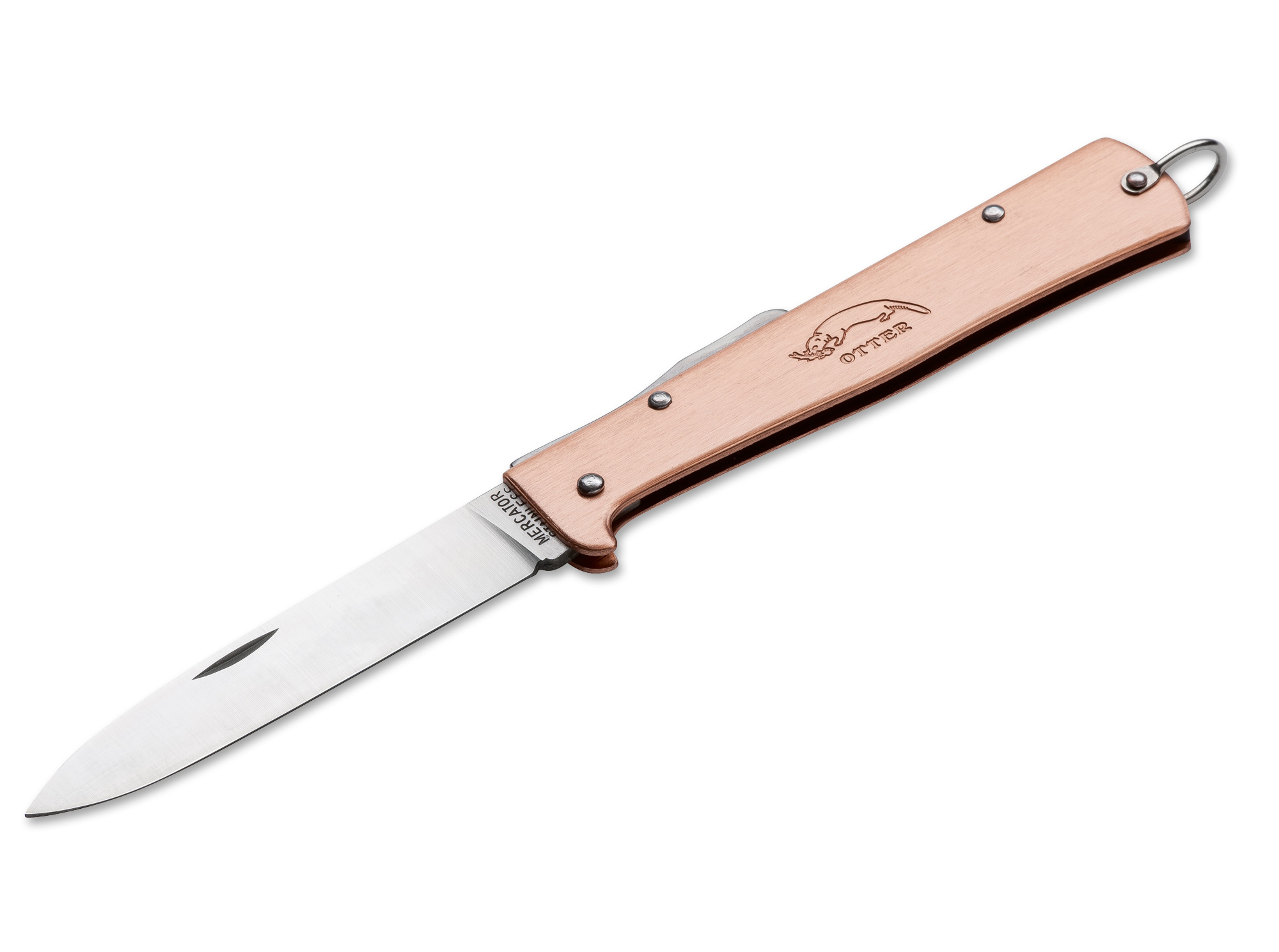
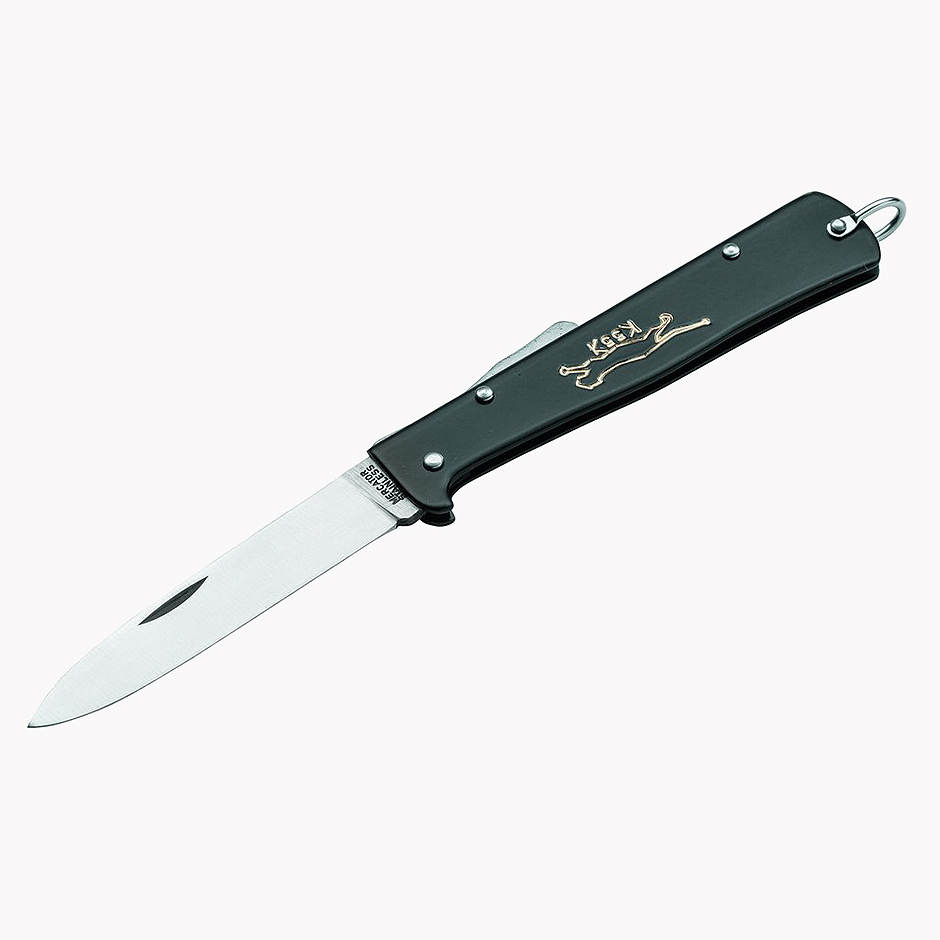
The Otter Mercator is an absolute legend among pocket knives. Also known as the "K55K" or "Black Cat Knive", the Mercator gained international fame especially after World War II when American GIs brought the folding knives back to the US from Germany.
However, the knife - which we now know as the "Mercator" - has been manufactured since imperial times in the late 19th century and was also used by soldiers in the German Army during World War I. Since then, it has been manufactured unchanged to this day, as the company Heinrich Kaufmann & Söhne registered it in 1867 as a Deutsches Reich Gebrauchsmuster. The abbreviation "K55K" stands for Kaufmann, Hochstr. 55, Katze. The US soldiers simply called the knife Black Cat Knife, which is a bit inaccurate. While the folded sheet steel handle is completely powder coated in black, the stamped cat is hand painted in gold color, then as now. Since 1995, the knife has been faithfully built by Otter under the Mercator name, and its design has changed almost not a bit in over 140 years by now.
The backlock construction is a rather simple but extremely reliable design that can withstand harder use, but is still easy to use. The long blade is constructed of either stainless 1.4043 or - true to the original - non-stainless C75 carbon steel. The extremely flat design ensures that the Mercator is not a bit bulky in the pocket and is very easy to guide.
| Blade length: | 9,0 |
|---|---|
| Blade material: | rust-resistant |
| Blade thickness: | 2,0 |
| Handle Material: | Steel |
| Knife type: | Classic pocket knives |
| Lefthand suitable: | Limited suitable |
| Legal to carry in Germany: | Yes |
| Locking Mechanism: | Backlock |
| Opening: | Nail Nick |
| Overall Length: | 20,0 |
| Weight: | 74 |
Risk of cuts: The most common hazard when using knives is the risk of cuts. Sharp blades can easily penetrate skin and tissue.
Blade slippage: Improper handling or applying excessive force may cause the knife to slip, leading to uncontrolled movements and potential injury.
Injuries from falling knives: Knives should never be left unsecured or placed near the edge of tables or work surfaces, as they may fall and cause injury.
Dull blades: Dull knives pose a higher risk of injury, as they require more force and are more likely to slip. Knives should therefore be sharpened regularly and properly.
Improper use: Using a knife for purposes other than its intended use (e.g. as a prying tool) can damage the blade and may result in accidents.