€19.95*
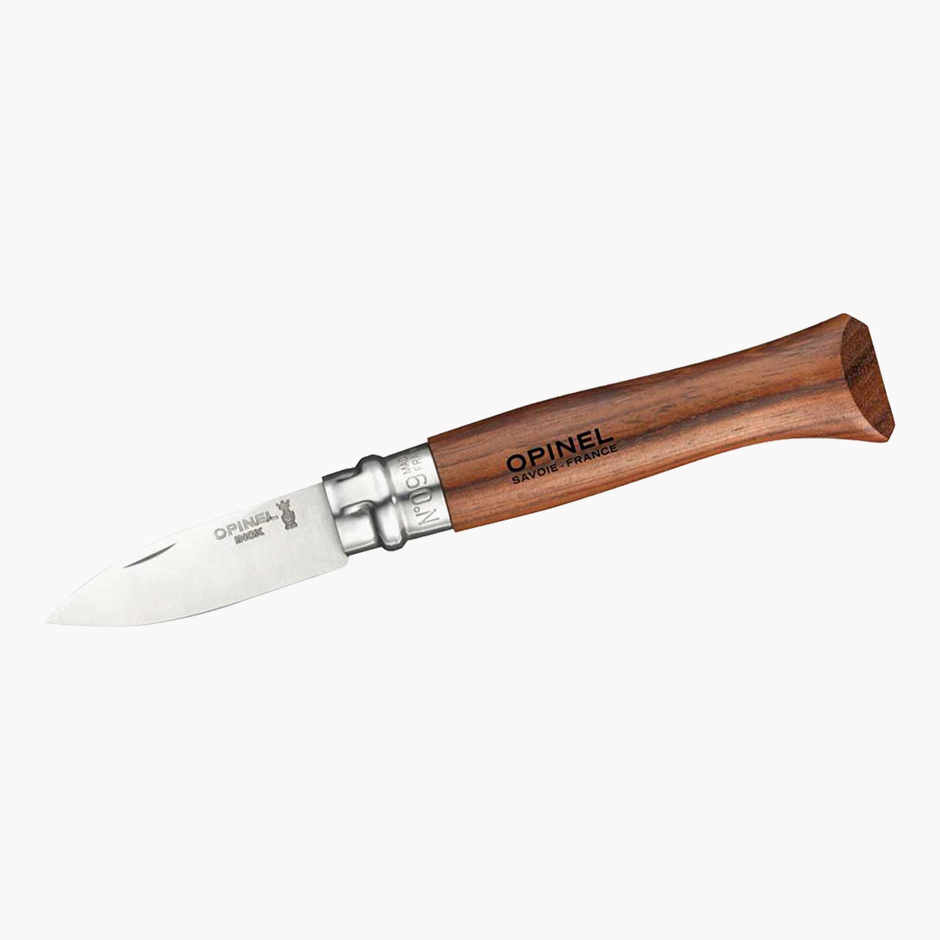
Opening oysters requires strength and skill. The oyster knife from Opinel, created especially for this purpose, proves to be a good helper in this. It is based on a size 9 handle, in this case made of lacquered bubinga wood. In addition to the attractive appearance, this also provides good protection against moisture penetration. The real highlight, however, is the blade specially produced for opening oysters, only 6.5 cm long but 2.2 mm thick, made of modified 12C27 Sandvik stainless steel. It should be noted that, to release the sphincter of the oyster, the blade is sharpened only at the tip about 1.5 cm. The rest of the blade is blunt and can thus be used as a lever to open. As a genuine Opinel, this model also has the familiar Virobloc lock, which reliably locks the opened knife.
| Blade length: | 6,5 |
|---|---|
| Blade material: | rust-resistant |
| Handle Material: | Wood |
| Knife type: | Special use |
| Lefthand suitable: | Limited suitable |
| Legal to carry in Germany: | Yes |
| Locking Mechanism: | Additional lock |
| Opening: | Nail Nick |
| Overall Length: | 18,2 |
| Weight: | 63 |
Risk of cuts: The most common hazard when using knives is the risk of cuts. Sharp blades can easily penetrate skin and tissue.
Blade slippage: Improper handling or applying excessive force may cause the knife to slip, leading to uncontrolled movements and potential injury.
Injuries from falling knives: Knives should never be left unsecured or placed near the edge of tables or work surfaces, as they may fall and cause injury.
Dull blades: Dull knives pose a higher risk of injury, as they require more force and are more likely to slip. Knives should therefore be sharpened regularly and properly.
Improper use: Using a knife for purposes other than its intended use (e.g. as a prying tool) can damage the blade and may result in accidents.